On this page
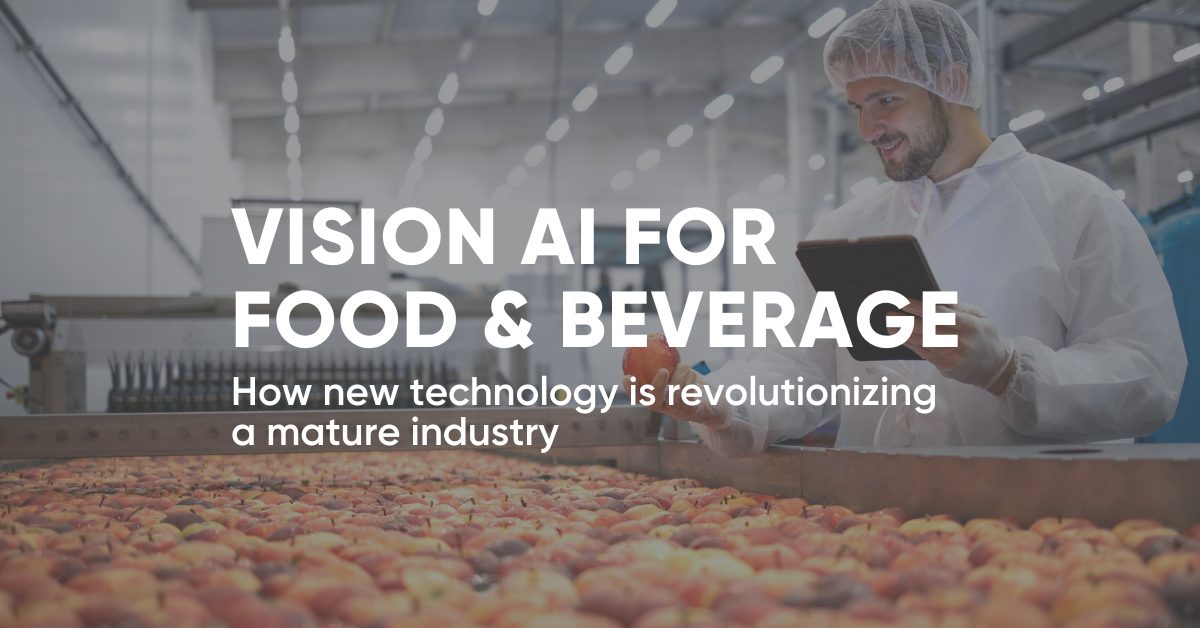
Vision AI helps food and beverage production facilities automate quality control, detect contaminants such as plastic or metal fragments, verify code date labels, count products, and reduce downtime and waste. ClearObject's ClearVision runs at the edge, analyzing camera images in real time on devices inside your facility.
It replaces or supports manual inspection, which can be time-consuming, prone to human error, and costly.
What is ClearVision?
Vision AI combines the power of artificial intelligence (AI) with computer vision technology, all processed “at the edge” – directly on devices within your production facility. This means cameras and sensors feed data to the edge device where AI algorithms can analyze images and videos in real-time, without needing to send data to the cloud or a central server. Edge computing reduces latency when real-time decisions are needed.
The insights created from ClearVision can then be integrated into a PLC or MES to correct deviations in products in near real-time.
How Does Vision AI Benefit Food and Beverage Manufacturers?
Food and beverage manufacturers are already seeing returns from Vision AI solutions like ClearVision on some of their most challenging problems. Benefits include:
Increased Efficiency and Productivity:
- Automated Quality Control: ClearVision can automatically inspect products for defects, blemishes, inconsistencies, and contaminants, reducing or eliminating the need for manual inspection and significantly speeding up production lines.
- Real-time Process Optimization: By continuously monitoring production processes, ClearVision can identify bottlenecks, optimize equipment performance, and predict maintenance needs, increasing overall equipment effectiveness (OEE).
- Reduced Downtime: Early detection of potential issues allows for proactive intervention, minimizing downtime and ensuring smooth production flow.
Improved Quality Control and Food Safety:
- Enhanced Accuracy: AI algorithms can detect even the most minor defects and inconsistencies the human eye might miss, ensuring consistent product quality and reducing the risk of recalls.
- Contamination Detection: Vision AI can identify foreign objects, such as plastic or metal fragments, in food products, safeguarding consumer safety and protecting brand reputation.
- Compliance with Regulations: By automating quality control processes, ClearVision helps food and beverage manufacturers meet strict safety and labeling regulations, reducing the risk of non-compliance penalties.
Reduced Costs and Waste:
- Lower Labor Costs: Automation of inspection tasks reduces the need for manual labor, leading to significant cost savings.
- Minimized Waste: Early detection of defects and contamination prevents faulty products from reaching the market, reducing waste and minimizing the environmental impact.
- Optimized Resource Utilization: By analyzing production data, ClearVision can identify areas for improvement in resource allocation, leading to more efficient use of energy, water, and raw materials.
Code Date Label Verification:
- Label Verification: ClearVision can accurately read and verify code dates, lot numbers, and other critical information on product labels, ensuring it is placed correctly, legibly, and accurately.
- Preventing Costly Recalls: ClearVision helps manufacturers avoid costly product recalls due to mislabeling or expired products by guaranteeing accurate labeling.
Other Applications:
- Packaging Inspection: Ensuring proper sealing, fill levels, and label placement.
- Grading and Sorting: Automatically sorting products based on size, color, or other quality parameters.
- Inventory Management: Monitoring stock levels and predicting demand.
What are real-world examples of Vision AI in food production?
- Blemish detection in produce: One of our customers is a leader in frozen vegetables, and not all veggies have consumer-friendly appearances. Bumps, bruises, and discolorations impact the appearance of the food, which in turn affects consumers’ appetites. Too much variation or damage can lead to customer complaints and lost sales. Using ClearVision, the algorithm detects products that deviate too far from the ideal appearance and alerts the line to remove the outliers.
- Quick Product Counts: It can be hard to ensure 100 packs of candy are dropped into the package every single time. If you are short, you have sad consumers. If you go over, you’re losing money.
ClearVision quickly counts the number of items dropped into each package while calculating the variety of the mix. Meeting and not exceeding SLAs keeps customers happy while avoiding unnecessary waste. - Code Date Label Verification: Consumers expect a legible “Best by” date on every product. But sometimes the label is printed incorrectly, or the printer is low on ink. Sometimes, packages are skipped. Recalls are costly, as is a loss of consumer trust. ClearObject customers are using ClearVision to check every package on the line to confirm the Code Dates are printed correctly and identify deviations before they become an issue.
- Foreign Matter Detection: Branches, strings, insects, and even fragments of golf balls have been known to make their way to consumers via packaged goods. ClearVision helps identify and remove items that metal detectors and X-rays may miss.
How do you implement edge Vision AI in your facility?
The implementation of ClearVision can be tailored to your specific needs and budget. In some cases, existing cameras can be used. In many cases, cameras and lighting can be quickly installed on existing lines and avoid replacing older, yet functional, equipment. Read more about the hardware essentials needed for Vision AI.
To begin exploring ClearVision, identify the critical control points where AI can impact your production process the most.
Consider factors such as:
- Types of defects and contaminants to be detected
- Required accuracy and speed
- Existing infrastructure and equipment compatibility
Partnering with a reputable Vision AI provider such as ClearObject can help you identify the highest ROI use cases, choose the right hardware and software solutions, integrate them seamlessly into your existing systems, and ensure ongoing support and maintenance.
Getting started with ClearVision
ClearVision helps food and beverage manufacturers improve efficiency, quality control, and food safety, and it is easier to get started than you may imagine.
Frequently asked questions
Does ClearVision send production data to the cloud?
No. ClearVision processes images and video at the edge, on devices within your facility, so it can make real-time decisions without sending data to the cloud or a central server.
Can Vision AI work with existing equipment?
Yes. In some cases existing cameras can be used, and in many cases cameras and lighting can be quickly installed on existing lines without replacing older but functional equipment.
What can ClearVision verify on food labels?
ClearVision reads and verifies code dates, lot numbers, and other critical label information, checking that it is placed correctly and printed legibly and accurately.
Can Vision AI insights feed back into line controls?
Yes. ClearVision insights can be integrated into a PLC or MES to correct product deviations in near real time.
- ClearVision
- Food & Bev
- food manufacturing
- food manufacturing AI
- food production
- oee
- vision AI
- Vision for Food & Beverage