On this page
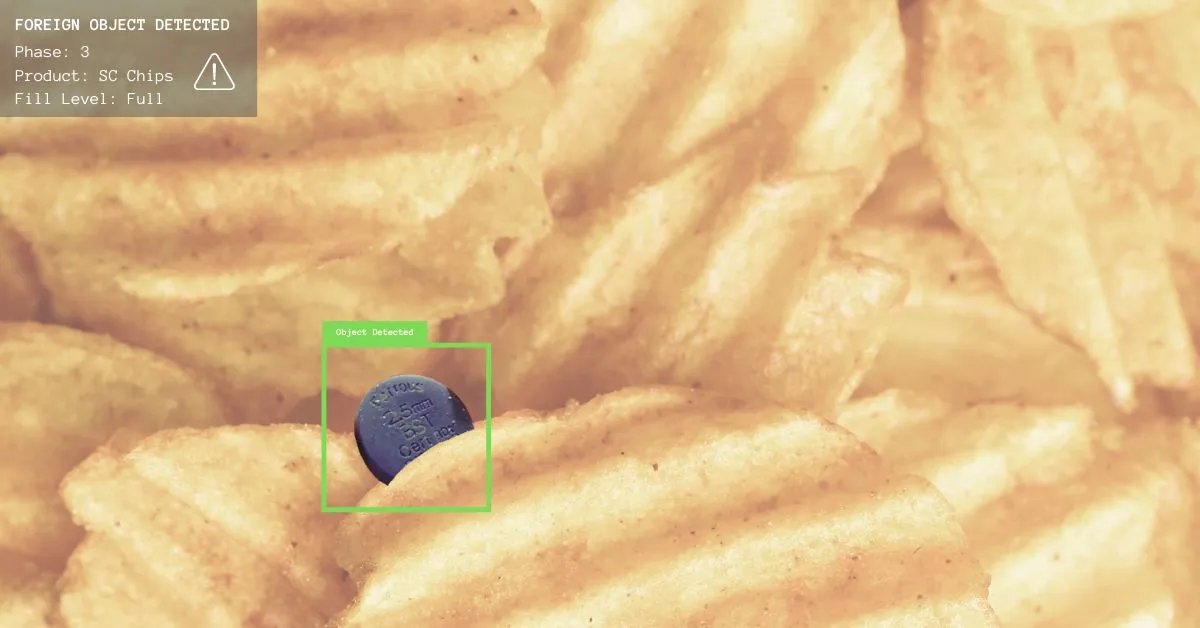
Vision AI detects foreign matter in food, such as shards of glass or pieces of plastic, wood, or metal, by using cameras and machine learning to flag anything on the line that isn't supposed to be there. Inspectors are alerted right away, so contaminants that metal detectors, X-rays, or a tired inspector might miss don't reach the package.
Consider Bob, who has watched a french fry line for 15 years. If golf balls from a supplier's potato field get picked up and processed, metal detectors won't catch the pieces and X-rays might not either. Bob is good at his job, but at the end of a long shift he may miss them too. The customer who opens the bag will not.
The U.S. Food and Drug Administration (FDA) estimates that recalls of single products can cost global companies around $10 million. Metal detectors and X-rays are standard but not foolproof, so food and beverage manufacturers are beginning to add Vision AI for foreign matter detection and quality control.
Simply put, Vision AI uses advanced, custom algorithms to turn images from any camera into useful data, recognizing deviations from the norm. Images can be used to track product size, line speed, shapes, counts, and yes, even recognize objects that are not supposed to be there.
How does Vision AI detect foreign matter?
Despite rigorous existing standards, unexpected foreign materials can still slip through conventional detection processes. These contaminants can range from minuscule shards of glass to barely noticeable pieces of plastic, wood, or metal, posing significant risks to consumer health and company reputations. Traditional methods rely heavily on human inspection and essential machinery, which, despite best efforts, may not catch every anomaly.
This is where Vision AI comes into play, offering a much-needed enhancement to detection capabilities. By integrating high-resolution cameras and intelligent algorithms, Vision AI systems are designed to identify and flag anomalies at a speed and accuracy far beyond human capabilities. These systems analyze visual data in real-time, learning and adapting to recognize various materials that should not be present in food products.
When foreign matter is detected, inspectors can be alerted to take action right away. By quickly correcting any issues, production rates increase while waste decreases.
Quality Control Refined
Vision AI not only spots foreign objects but also assists in enforcing quality standards in manufacturing processes. It provides consistent, 24/7 monitoring without fatigue, significantly reducing the margin of error. By automating the detection process, companies can ensure that only products meeting the highest quality standards reach the consumer. This level of consistency in monitoring helps maintain brand integrity and builds trust with consumers increasingly concerned about food safety.
How does Vision AI address hidden contaminant risks?
Hidden contaminants in food production are a recurring nightmare for quality control managers. The most minor oversight can lead to massive recalls, legal issues, and a tarnished brand image. Vision AI acts as an advanced layer of defense, allowing manufacturers to detect and address these risks before they become a significant issue. Its ability to learn and adapt to various production environments makes Vision AI an indispensable tool for identifying risks that may otherwise go unnoticed.
Vision AI provides insights into potential vulnerabilities within the production line through detailed analytics and reporting, allowing for proactive adjustments and continuous process improvement. This proactive approach to addressing hidden risks enhances safety and optimizes manufacturing efficiency.
How does Vision AI improve food production operations?
Vision AI improves product quality and safety in food and beverage manufacturing and reduces the waste and downtime associated with traditional quality control methods.
Our friend Bob is as great at his job as any human can be, but even Bob gets distracted and needs a helping hand, or camera, to maximize efficiency.
Need more information?
Contact ClearObject to explore how Vision AI can be integrated into your food and beverage manufacturing processes.
Frequently asked questions
What foreign materials can Vision AI detect in food?
Vision AI can flag contaminants ranging from minuscule shards of glass to barely noticeable pieces of plastic, wood, or metal, along with any other object that isn't supposed to be on the line.
Does Vision AI replace metal detectors and X-rays?
No. Metal detectors and X-rays are standard but not foolproof, and Vision AI acts as an added layer of defense alongside them and human inspection.
What happens when Vision AI detects foreign matter?
Inspectors are alerted so they can take action right away. Correcting issues quickly increases production rates and reduces waste.
What else can Vision AI monitor on a food production line?
The same camera images can track product size, line speed, shapes, and counts, and provide 24/7 monitoring without fatigue.
- AI for food and beverage manufacturing
- contaminants risks in food
- food and beverage
- food manufacturing
- food quality
- food quality control
- food safety
- food safety standards
- foreign matter detection
- vision AI
- vision ai detection for food