ClearWorkZone
Seconds that save lives.
ClearWorkZone mounts to the trucks your crews already bring to the zone. When a vehicle crosses the work zone boundary, edge AI on the truck detects it and alerts every worker in about half a second. No network required.
Why awareness alone isn’t enough
- People died in work zone crashes in 2023 (FHWA)
- 899
- Injuries in work zone crashes that same year (National Safety Council)
- 40,170
- Increase in work zone deaths since 2010 (NSC analysis of NHTSA data)
- 53%
- Work zone fatalities who are drivers or passengers, not workers (FHWA)
- 4 in 5
- Highway contractors that had vehicles crash into their work zones in the past year (AGC, 2025)
- 60%
- Covered every second by a vehicle at 60 mph
- 88 ft
In production
Protection that travels with the truck
ClearWorkZone has been live on New York State Thruway trucks since July 2026, after a two-week field validation at a live work zone in June 2025, and is rolling out across the Thruway’s divisions. Feedback from Thruway crews in the field shaped both the ClearGuard™ wearable and the in-cab touchscreen.
It is a system you deploy, not one you build: industry-standard cameras and edge compute on the truck, plus a ClearGuard wearable for every worker. Position the truck, confirm the zone on the touchscreen, and protection is live. No roadside arrays to place, calibrate or retrieve, and no change to the approved traffic control plan.
- Built for the short-duration maintenance zones crews set up and tear down every day
- About two days to install per truck, plus a day of remote testing
- Powered by the truck; wearables charge in a dock on board
- All detection and alerting runs on the truck, with zero network dependency
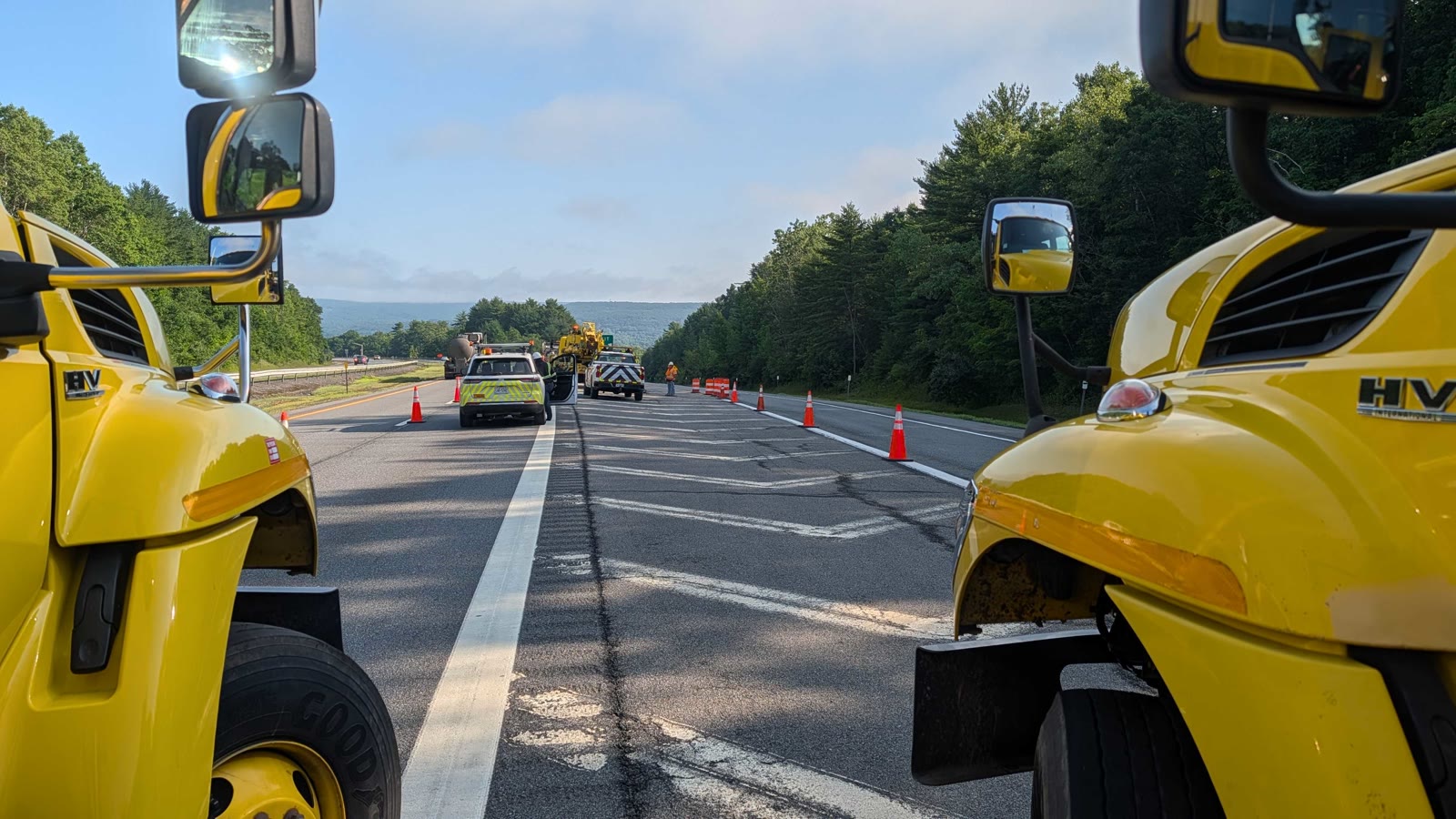
Detect
Real-time intrusion detection
Cameras connected to edge computing devices mounted on work vehicles analyze video in real time and identify when a vehicle crosses into a defined danger zone.
The system runs entirely at the edge, requiring no network or cellular connectivity, so alerts fire reliably in rural highway construction zones where connectivity is least dependable.
- Works with cameras already present on most work vehicles and at construction sites
- Distinguishes vehicles that are appropriately slowing and merging from those intruding at speed or erratically
- Configured from a touch screen in the truck once cameras are calibrated
Detect, don’t predict
An alert crews believe is an alert crews act on
Every intrusion system makes one choice: when to fire. A wearable that cries wolf gets tuned out or switched off, and then it protects no one.
- 01
Predictive radar fires before the crossing
Buys a little lead time from approach speed and trajectory, at the cost of false alarms tuned corridor by corridor.
- 02
Impact triggers fire after the strike
Trip hoses and impact-activated cones alert only once the perimeter has already been hit, and they have to be placed and retrieved every shift.
- 03
ClearWorkZone fires on the actual breach
Vision AI alerts when a vehicle crosses the boundary you defined, so the alert is real nearly every time and crews move when it fires.
Measure
Near misses count too
Work zone statistics don’t include near misses, which disrupt work and can cause trauma for drivers and workers. ClearWorkZone tracks vehicles and other road users and monitors their trajectory relative to the work zone boundary.
The near-miss radius is set relative to a pedestrian’s height, so sensitivity can be tuned for each site.
Tested hard before it reaches a crew
- Average from a vehicle crossing the zone to every wearable alerting (controlled tests)
- 450 ms
- Consecutive alerts delivered in a reliability test
- 100/100
Alert
Alerts workers can feel
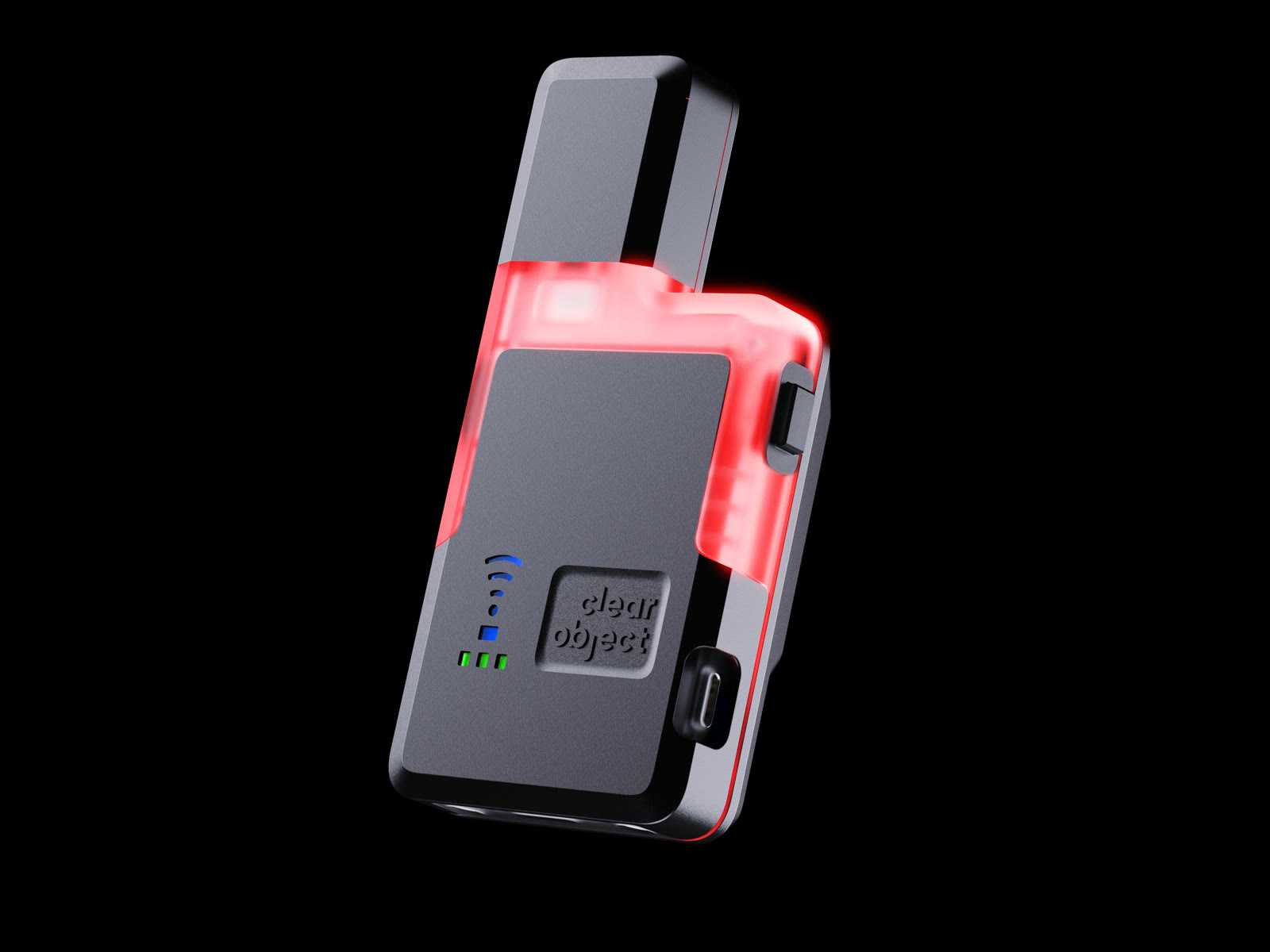
Detection without notification is just data. Each worker is equipped with a ClearGuard™, a wearable edge device that delivers real-time visual, haptic and audio alerts when a vehicle breaches the zone perimeter.
It gives workers critical seconds to move to safety. This is the difference between a system that records what happened and a system that prevents what was about to happen.
- About 0.5 seconds from a detected intrusion to every ClearGuard alerting
- 2,000 ft alert range over the truck’s own Wi-Fi mesh, so a cellular dead zone never silences it
- The truck’s air horn and warning light fire at the same moment, warning the driver and anyone without a wearable
ClearGuard™
A wearable built for the work zone
ClearGuard is the one purpose-built part of ClearWorkZone, because the alert has to land on every worker, not just the one looking the right way. When the truck detects an intrusion, every ClearGuard in the zone vibrates, sounds and flashes at the same moment.
- Vibration, a loud tone and a high-intensity light, together
- Six ounces, with a metal clip for vests, hard hats and equipment
- Lasts a full shift and charges in a dock on the truck
- Every wearable in the zone alerts in sync, so no one misses it
Learn
Evidence and data for smarter policy
ClearWorkZone logs every intrusion with timestamps, trajectories, severity scores and location data. A dashboard lets planners, safety officers and operations teams review incidents, track patterns and refine system parameters.
- Intrusions and near misses trigger synchronized recordings from rear, front and side cameras
- Evidence packets for safety supervisors, law enforcement and regulators
- Real-time positioning of every outfitted truck over LTE
- Speed data to show how setup and policy reduce speed through the work zone
- Events are WZDx-structured, with CSV export
- Post-incident understanding, not enforcement: no license plate reading and no citations
How ClearWorkZone works
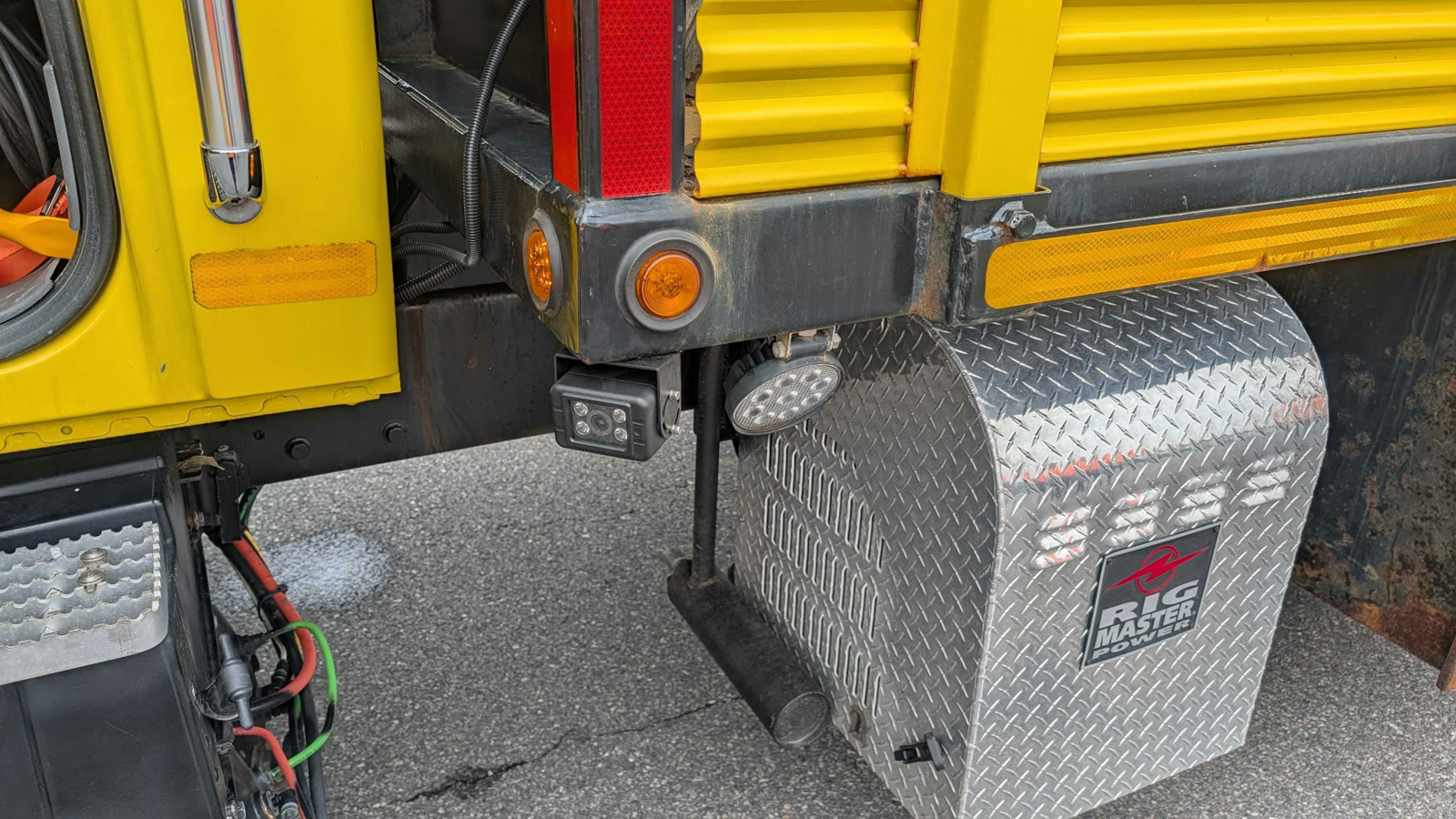
Camera integration & calibration
We integrate with existing site cameras or deploy new ones, and provide all the hardware for monitoring and alerting, including wearables.
Object detection & tracking
Vehicles and other road users are tracked, and their trajectory is monitored relative to the work zone boundary.
Intrusion logic & alert triggering
Defined spatial buffers are monitored. If an object crosses into a prohibited zone, an alert is triggered in real time.
Alert delivery & escalation
Alerts go to worker wearables, in-field audible, visual and haptic alarms, control center dashboards, or signage and barrier control systems.
Event logging & feedback
Each event is recorded with context. Supervisors review events, verify false alarms and feed corrections back to tune future performance.
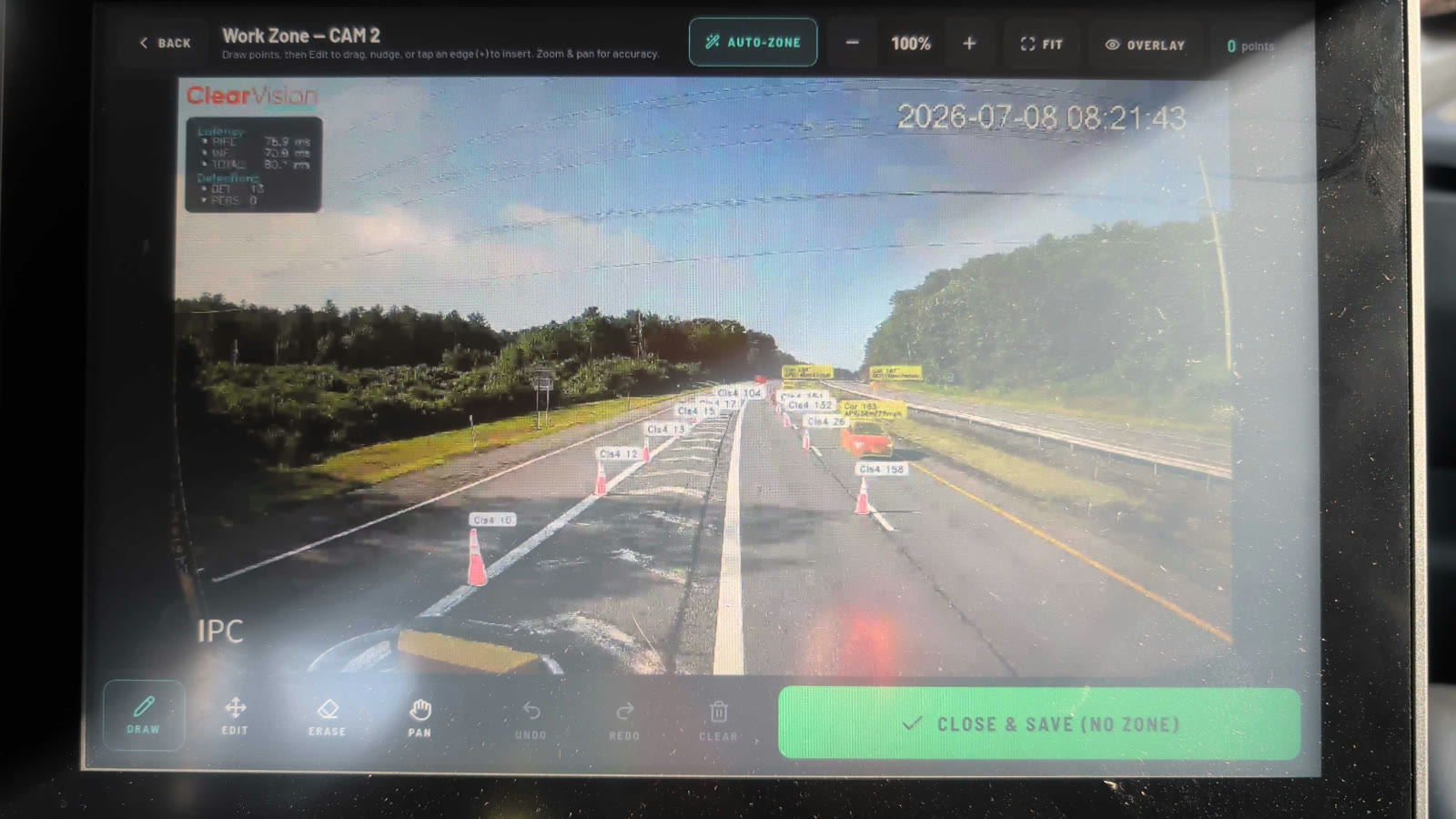
Continuous improvement
ClearWorkZone learns from verified events, operator feedback and changes to the work zone, such as shifting lanes or new taper layouts, and fine-tunes detection thresholds and boundaries.
People in the zone, not just vehicles
Alerts also fire when a person walks into the protected zone from outside it.
Night operations
An optional lidar sensor detects intrusions after dark, when oncoming headlights blind a camera.
Evidence from every camera
Each intrusion saves synchronized clips from every camera on the truck, backed by a rolling 48-hour buffer on board.
Deployment
Buy it, lease it, or run it as a service
Off-the-shelf cameras and edge compute wherever possible, for a dependable supply chain. Every option includes the ClearWorkZone software license, model updates and support.
- 01
Project lease
ClearObject-owned kits deployed to your project, with maintenance and spares included. Hardware returns at project close. Best for single corridors, seasonal programs and pilots.
- 02
Capital purchase
Your organization owns the truck kits and wearables, with support and maintenance plans available. Best for fleet programs and capital or grant funding.
- 03
Managed service
Hardware and software in one annual subscription, with refresh and replacement handled for you. Best for long-term, multi-truck deployments.
ClearWorkZone questions
How far ahead can it detect a vehicle?
With the standard truck cameras, ClearWorkZone reliably detects a car about 200 feet out, with first detections at 300 to 400 feet. Intrusion alerts are based on the zone boundary you set, not on how far away a vehicle is first seen.
How fast does a worker get the alert?
About half a second from a vehicle crossing the zone boundary to every ClearGuard vibrating, sounding and flashing. In controlled tests the average was 450 milliseconds: about 0.30 s for the camera, 0.08 s to decode, 0.02 s for the model and 0.10 s to reach every wearable.
Does it need cell coverage?
No. Detection runs on the truck and alerts travel over the truck’s own wireless mesh, so a dead zone never silences an alert. LTE is only used to upload evidence and status when it is available.
Will it alert on our own trucks?
Vehicles that are parked or leaving the zone don’t trigger alerts, and crews can snooze alerts from the in-cab touchscreen while their own equipment moves through.
Does it work at night?
Yes, with the optional lidar sensor. Cameras alone struggle with oncoming headlight glare, so lidar handles detection after dark.
How long does the wearable battery last?
At least a full shift, even with heavy alerting in summer heat. Wearables recharge in a dock on the truck between shifts.
Does it change our traffic control plan?
No. ClearWorkZone operates within MUTCD-compliant temporary traffic control and requires no change to device layout or the approved plan. It adds a layer of protection; it never replaces required devices.
How is it installed?
Each truck takes about two days to install plus a day of remote testing, using industry-standard cameras and edge compute. ClearObject can install, or support your technicians through the first trucks so they can install the rest of the fleet.
From the blog
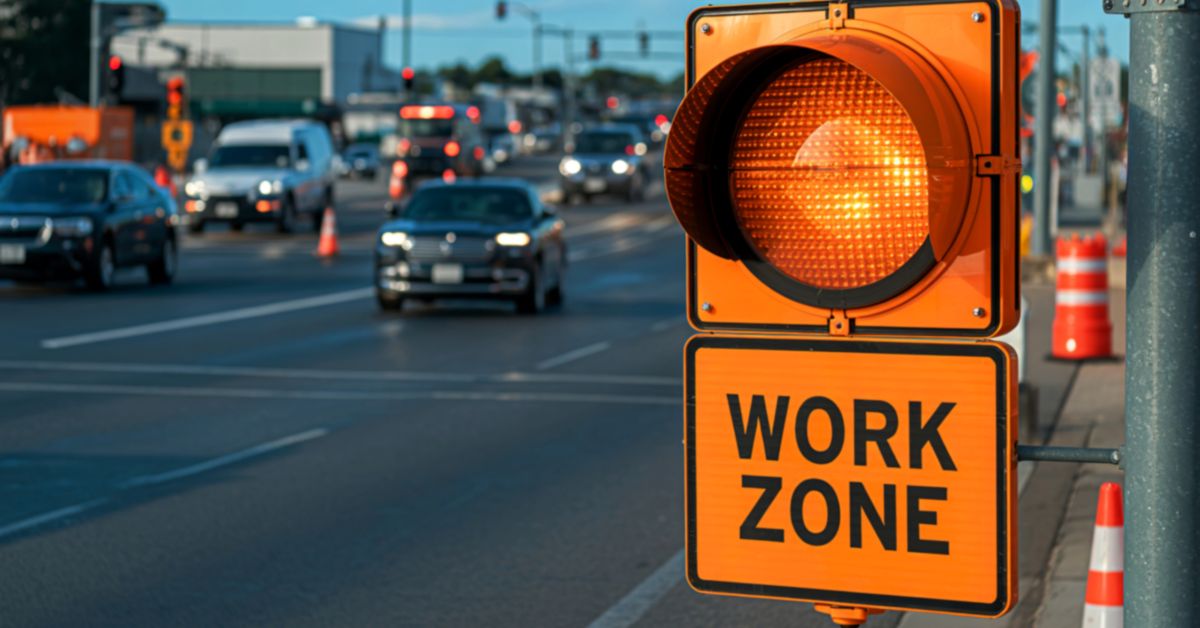
Blog
Beyond Work Zone Awareness Week: How Vision AI Prevents Intrusions
Awareness campaigns can't protect workers once a vehicle enters a work zone. Vision AI intrusion detection and wearable alerts give crews seconds to move.

Blog
How to Build a Stronger SS4A Grant Application
Strong SS4A applications prove where risk is concentrated, how results will be measured, and that the approach can scale, using location-specific safety data.

Blog
Gemini for Government: Making Vision AI Explainable for Public Agencies
Gemini for Government explains Vision AI detections in plain language, adds context, and shows why events were flagged so agencies can validate and act.
Feel the alert yourself.
We bring a self-contained mobile kit to your site and run controlled intrusions while your crew wears ClearGuard. About 90 minutes on your side, any site works, and nothing is installed on your vehicles.
Request a demo